Babies available now
Werewolves

History
In the 1950’s there was a variety known as naked that was very similar if not identical to today’s werewolf. It was believed to of gone extinct for many years, and resurfaced at an American rattery in 2017-2018. Since then a small handful of dedicated breeders have been working with the gene.
It’s proper name is patchwork however most breeders refer to them as werewolf, as there is already 2 different known patchwork varieties. One being easily made by doubling up on the rex gene. The other is an Australian gene which is not available in North America.

My Vision
My vision is to create a werewolf rat with a fearless people loving personality, with big beautiful expressive eyes and well defined symmetrical hair growth in both sizes and ear types.
Odd eyed werewolves will be also found within my rattery. Strong immune systems I have already begun selecting for within the foundation of the line I am developing here at GBR.
I got my werewolves from Rubios Remarkable Rattery in North Carolina and couldn’t be more pleased!

Werewolf facts
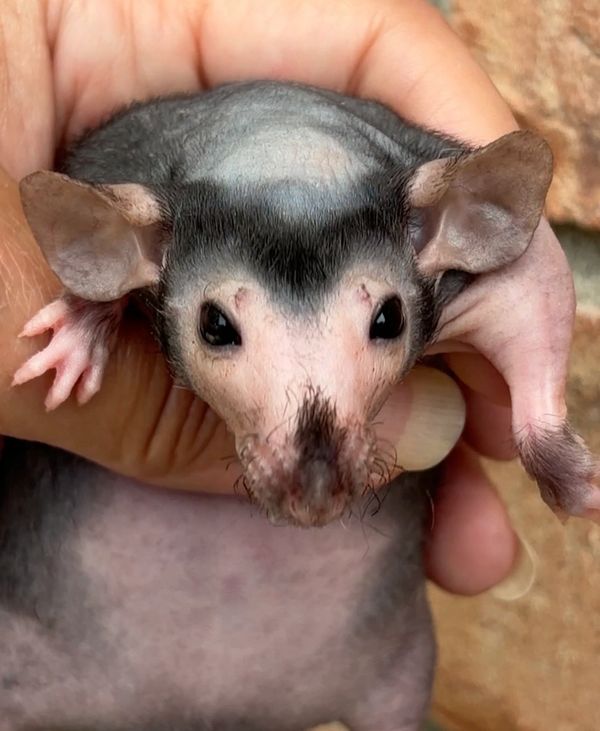
The coat of the werewolf rat is completely unique to the variety. They can look like a completely different rat in as short as a few days. They are constantly changing.
Sometimes they look completely hairless and can be confused as a hairless rat. Other times they can be almost fully furred.
As very young babies when fur would be naturally starting to grow, their skin becomes thick, and wrinkled almost looking like a shar pei dog.
Temperament
The temperament of my first 2 werewolves are what caused me to fall in love with them. They are probably the most silly, loving and intuitive rats I have met.
I have come to the understanding that this is more of a bloodline trait versus a variety trait. Many in the past have discovered undesirable characters in the variety.
Thankfully some breeders have corrected this and helped create a memorable personality.

Werewolf Care
They do not require any real extra care, however caution should always be applied with regards to dust and debris collecting under their eye lids. As they do not have the same protective eye lashes as furred varieties.
I haven’t found any extra care for their skin after weaning. While still in the nest I have found some get dry skin, and I provide a nice coconut oil massage that they absolutely love.

A word of caution
Werewolf rats are fairly rare, and with that comes a higher price tag. Unfortunately this catches the eye of dishonest people who are breeding basic double rex’s and selling as werewolves.
At different stages of development it can be a bit difficult for most people to be able to tell the difference. However if you look at the first picture on this page, that is a werewolf showing one of its unique characteristics.
An excellent link showing and explaining the difference between werewolf, hairless and double rex (also called patchwork)